
Lifestyle-Based Pain Is Not a Disease — It’s a Communication
Physiotherapy, Pain Science, Spine & Posture Health, Patient Education, Lifestyle & Wellness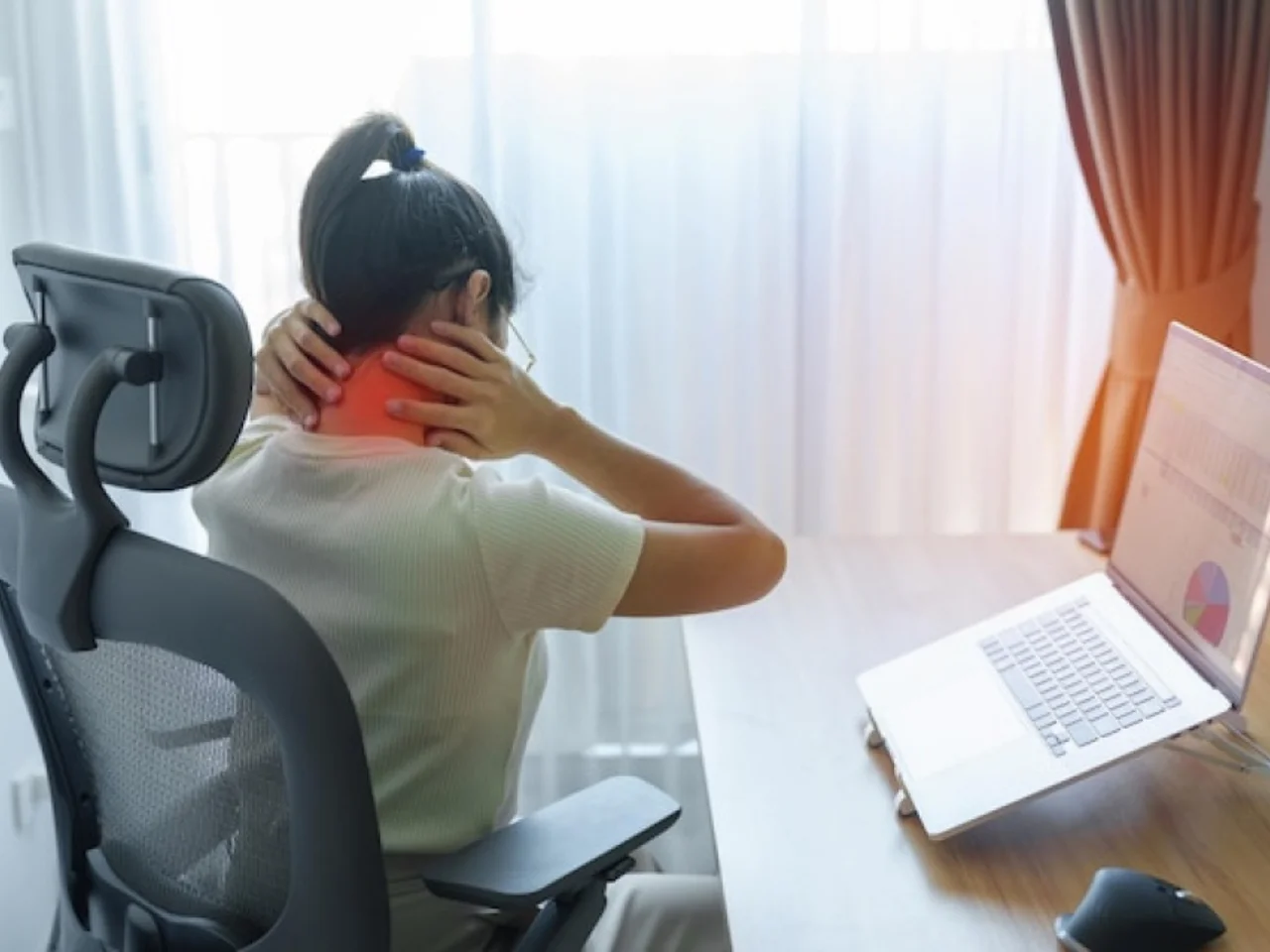
Lifestyle-Based Pain Is Not a Disease — It Is Your Body Communicating
By Dr. Palanivel Mayavan, Lead Physiotherapist & Founder, Le Yantra Spine & Sports Injury Clinic, Bangalore
The Way We Think About Pain Is the Problem
When pain arrives, the instinct is almost universal: find out what is wrong, find something to take it away, and return to life as it was before.
A scan is requested. A diagnosis is sought. A prescription is written. And when the pain persists — as lifestyle-based pain very often does, despite all of these interventions — the conclusion is typically that something more serious must be wrong, or that the treatment has simply not been strong enough yet.
This framework, while understandable, is the primary reason that so much lifestyle-based pain becomes chronic. It treats the signal as the problem, rather than as information about the problem.
Back pain, neck stiffness, persistent shoulder tension, recurring knee discomfort — in the majority of patients who present with these complaints, there is no structural disease, no acute injury, no pathology visible on imaging that fully explains what they are experiencing. What there is, consistently, is a body that has been placed under sustained, cumulative stress — through posture, movement patterns, inactivity, psychological load, and insufficient recovery — and that has reached the threshold at which it can no longer absorb that stress silently.
Pain, in this context, is not the disease. It is the body's most reliable communication system, delivering a message that deserves to be understood rather than simply suppressed.
Pain Is a Protective Signal, Not a Punishment
The neuroscience of pain has advanced considerably over the past two decades, and the clinical implications are profound. Pain is not a passive transmission of damage information from tissue to brain. It is an active, constructed output — the nervous system's best interpretation of a threat to the body, generated to prompt protective behaviour.
This means that pain is always real — it is never "just in your head" — but it is not always proportionate to tissue damage. A paper cut can produce disproportionate pain because the nervous system assigns high threat value to that location or moment. Conversely, significant structural changes visible on MRI — disc degeneration, mild herniations, facet joint arthrosis — are frequently present in people with no pain at all, because the nervous system has not interpreted them as threatening.
What the nervous system does respond to, reliably and cumulatively, is sustained mechanical overload. When the same tissues are placed under the same stress, day after day, without adequate recovery or variation, the system begins to lower its threshold — becoming more sensitive, more reactive, and ultimately more vocal. That escalating signal is lifestyle-based pain. And it is the body doing exactly what it was designed to do: communicating, with increasing urgency, that the conditions it is being asked to operate in are not sustainable.
The pain is not the enemy. The conditions generating it are. And conditions, unlike diseases, are changeable.
The Most Common Lifestyle Factors Behind Chronic Pain
After years of clinical practice treating patients across Bangalore, the patterns we see are remarkably consistent. Lifestyle-based pain rarely arises from a single cause. It is almost always the accumulated consequence of several compounding factors:
Prolonged sitting and static posture place sustained compressive and shear forces on the lumbar discs, progressively inhibit the deep spinal stabilisers, and adaptively shorten the hip flexors — creating the mechanical conditions for lower back pain that no amount of medication addresses at its source.
Repetitive movement patterns — the same reach, the same twist, the same overhead load, performed hundreds of times across a working week — overload specific tissues without allowing adequate recovery. The tissue capacity is exceeded. Pain is the result.
Physical inactivity deconditions the musculoskeletal system: muscles weaken, joints stiffen, connective tissue loses resilience. A body that has lost physical capacity is one that experiences pain at lower loads than a conditioned body — not because it is damaged, but because its tolerance threshold has fallen.
Psychological stress and poor sleep are direct physiological pain amplifiers. Cortisol, elevated in chronic stress states, promotes systemic inflammation. Sympathetic nervous system activation increases generalised muscle tone, particularly in the trapezius, suboccipitals, and paraspinals. Sleep deprivation impairs the restorative processes through which tissue recovers from daily mechanical loading — and independently lowers the central pain threshold, making the nervous system more reactive to inputs that would otherwise be sub-threshold.
Inadequate recovery from training — in the athletically active patient, insufficient rest between loading sessions prevents tissue adaptation and creates the cumulative micro-damage that underlies most overuse conditions.
Nutritional insufficiency — chronic dehydration reduces intervertebral disc height and resilience; vitamin D and magnesium deficiency are associated with musculoskeletal pain and impaired muscle function; anti-inflammatory nutrient insufficiency prolongs tissue recovery.
None of these factors is a disease. Each of them is a modifiable condition. And when they are identified and addressed systematically, the pain they generate reliably diminishes — not because the signal has been suppressed, but because the reason for the signal has been removed.
Disease vs. Dysfunction: A Distinction That Changes Everything
One of the most important clinical conversations we have with patients at Le Yantra is the distinction between disease and dysfunction.
Disease involves genuine structural pathology — tissue destruction, infection, neoplastic change, or autoimmune processes — that requires medical diagnosis and, frequently, medical or surgical intervention. Back pain arising from a spinal tumour, infection, or fracture is disease. It is serious. It requires appropriate specialist management.
Dysfunction — which accounts for the great majority of musculoskeletal pain presentations — involves no structural destruction. It involves a system that is working, but working poorly: muscles that are imbalanced, joints that have lost their normal mobility, movement patterns that have become inefficient, a nervous system that has been sensitised by cumulative overload.
Dysfunction is reversible. That is the essential clinical reality that changes the trajectory of care. A degenerated disc is not reversible — but the muscular inhibition, joint restriction, and movement dysfunction that are generating pain around it almost always are. A sensitised nervous system can be desensitised through graded exposure and targeted rehabilitation. A muscle that has been inhibited by prolonged sitting can be reactivated through progressive loading. A movement pattern that has become dysfunctional can be retrained.
When patients understand this — when they shift from the framework of "something is broken in my body" to "my body's mechanics need recalibration" — the clinical response changes profoundly. Fear reduces. Avoidance behaviour diminishes. Engagement with active rehabilitation increases. And recovery, consistently, accelerates.
Learning to Hear What the Pain Is Saying
The instinct when pain arrives is to ask: how do I make this stop?
The more productive clinical question is: what is this telling me?
Persistent lower back pain that develops during a sustained period of remote work, without any precipitating injury, is communicating that the mechanical environment of prolonged lumbar flexion has exceeded the body's tolerance. The message is not "you are injured." It is: "this position, sustained at this duration, is not sustainable for your spine."
Neck stiffness and cervicogenic headaches that worsen across the working week and ease slightly on weekends are communicating that the cervical spine is accumulating mechanical load during working hours that the weekend's reduced loading partially — but incompletely — allows to recover from.
Knee pain that emerges after increasing training volume is communicating that the rate at which load has been added exceeds the rate at which the knee's soft tissue structures can adapt.
In each case, the pain is specific, directional, and informative — if we are prepared to interpret it as communication rather than simply experience it as inconvenience.
At Le Yantra, a significant part of our clinical work is translating this communication for our patients: explaining what the pattern of their symptoms reveals about the underlying mechanics, so that the treatment plan addresses those mechanics specifically rather than simply targeting the pain.
Why Suppressing the Signal Without Addressing the Source Fails
Painkillers, anti-inflammatories, passive massage, heat patches — these interventions are not without value. In the acute phase, managing pain allows the patient to engage with rehabilitation that would otherwise be too painful to tolerate. Reducing inflammation allows tissue healing to progress. There are appropriate uses for all of these tools.
But when they become the primary treatment strategy — when the signal is managed but the source is not — the outcome is predictable. The pain returns. Often it returns in a slightly different location, as the body compensates around the original problem. Sometimes it returns more intensely, because the underlying mechanical or neurophysiological dysfunction has continued to progress during a period when the pain signal was suppressed and no corrective action was taken.
Lifestyle-based pain is not resolved by reducing the signal. It is resolved by addressing what is generating the signal. That requires understanding the contributing factors, correcting the mechanical and movement dysfunctions they have produced, and building the physical and psychological capacity to prevent their recurrence.
A Smarter Clinical Approach: Listening, Understanding, and Building Capacity
Effective, lasting management of lifestyle-based pain follows a consistent framework — one that addresses the full picture rather than the symptom in isolation.
Thorough assessment — of posture, movement quality, muscular strength and balance, joint mobility, lifestyle factors, psychological contributors, and the patient's specific daily demands. The assessment is the foundation. Without it, treatment is guesswork.
Root-cause identification — determining which specific combination of mechanical, neuromuscular, and lifestyle factors is generating the patient's symptoms, and designing the treatment plan around those findings.
Progressive rehabilitation — restoring the neuromuscular function, joint mechanics, and movement quality that lifestyle factors have compromised, through a carefully graduated programme that builds capacity without exceeding the tissue's current tolerance.
Education — helping patients understand the biology of their pain, the specific mechanisms driving their condition, and the rationale behind each element of their treatment. Pain neuroscience education consistently demonstrates clinical value: patients who understand their pain manage it better, fear it less, and recover more completely.
Lifestyle and ergonomic guidance — because rehabilitation performed in clinic is only one component of the recovery environment. The workstation setup, the sleep surface, the movement habits across the working day, the stress management strategies, the recovery practices — these are the conditions in which the body either consolidates or undermines the gains made in treatment.
Empowerment toward independence — the explicit goal of modern musculoskeletal rehabilitation is not to create dependence on treatment. It is to build the patient's own understanding and physical capacity to the point where they are no longer reliant on external intervention to remain well. A patient who understands their body, can self-manage minor flare-ups, and has the physical resilience to meet their daily demands is a successfully rehabilitated patient.
From "What's Wrong With Me?" to "I Know What My Body Needs"
This is the shift we aim for at Le Yantra — and it is one of the most clinically meaningful changes we observe in patients who engage fully with the process.
When pain is understood as communication rather than catastrophe, fear diminishes. When the specific factors driving the pain are identified and addressed, confidence in the body's capacity to recover grows. When progressive rehabilitation builds genuine physical resilience, the frequency and severity of flare-ups reduces. When patients understand the relationship between their lifestyle choices and their pain experience, they gain genuine agency over their own wellbeing — not dependence on the clinic, but the knowledge and capacity to take care of themselves.
Pain that was once experienced as a life sentence is reframed as a signal that, once heard and responded to appropriately, becomes quieter — and eventually, for the majority of patients, stops entirely.
Your Pain Is Asking for Attention, Not Suppression
If you are living with persistent back pain, neck stiffness, shoulder tension, or any of the musculoskeletal complaints that have become so common in modern life, the most important thing to understand is this: it is not inevitable, it is not permanent, and it is not a sign that your body is failing you.
It is a sign that your body needs attention — specific, informed, structured attention that addresses the actual source of the problem.
Book a consultation at Le Yantra Spine & Sports Injury Clinic, Bangalore.
Our specialist team will assess your condition thoroughly, identify the lifestyle and mechanical factors contributing to your pain, and build a personalised rehabilitation plan designed to resolve it — not manage it, not suppress it, but resolve it.
Your body is communicating. We will help you understand what it is saying.
Available at our Malleswaram and MEI Layout clinics, Bangalore.