By Dr.Palanivel Mayavan, Lead Physiotherapist & Founder, Le Yantra Spine & Sports Injury Clinic
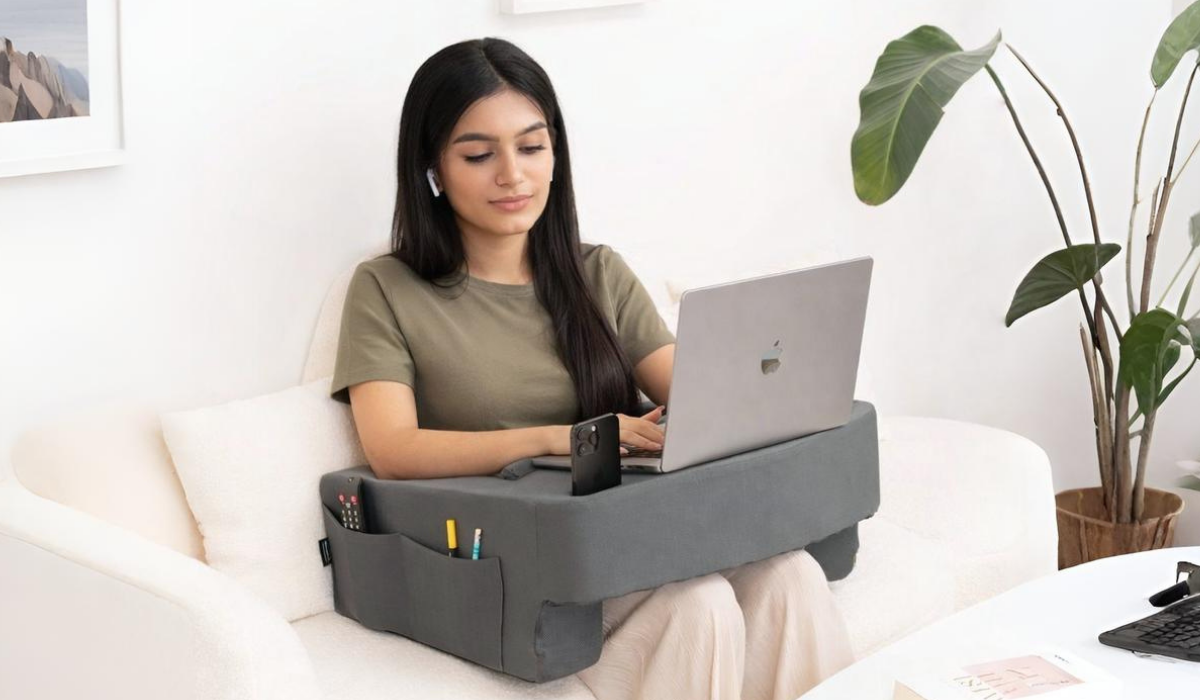
You wake up, check your phone. You get to work, open your laptop. You come home, scroll through Instagram. By the time your head hits the pillow, your screen time has crossed eight to ten hours — and your spine has quietly absorbed every single minute of it.
Neck pain and back pain are now among the most common health complaints worldwide. But what's changed in the last decade isn't our anatomy — it's our posture. The rise of smartphones, remote work, and digital dependency has created a new kind of physical stress on our bodies. One that builds slowly, silently, and then suddenly becomes impossible to ignore.
Here is something most people do not know: the human head weighs approximately 5 to 6 kilograms in a neutral, upright position. But the moment you tilt your head forward — even by just 2 to 3 inches to look at your phone — the effective weight your cervical spine has to carry increases dramatically.
At a 15-degree forward tilt, your neck carries around 12 kilograms of load. At 30 degrees, that number rises to nearly 18 kilograms. At 60 degrees — which is a common phone-scrolling angle — your neck is under approximately 27 kilograms of pressure.
This condition has a clinical name: Forward Head Posture (FHP). And it is one of the leading causes of chronic neck pain, upper back pain, headaches, and even jaw tension in adults today.
Here is something most people do not know: the human head weighs approximately 5 to 6 kilograms in a neutral, upright position. But the moment you tilt your head forward — even by just 2 to 3 inches to look at your phone — the effective weight your cervical spine has to carry increases dramatically.
At a 15-degree forward tilt, your neck carries around 12 kilograms of load. At 30 degrees, that number rises to nearly 18 kilograms. At 60 degrees — which is a common phone-scrolling angle — your neck is under approximately 27 kilograms of pressure.
This condition has a clinical name: Forward Head Posture (FHP). And it is one of the leading causes of chronic neck pain, upper back pain, headaches, and even jaw tension in adults today.
Smartphone posture gets a lot of attention — but the laptop is equally, if not more, damaging. When you sit at a desk for extended periods, particularly on a laptop with a low screen and a keyboard that forces your shoulders inward, your body begins to adapt to that position.
Here is what happens internally over time:
Spinal disc compression occurs when you hunch forward, the discs between your vertebrae — which act as shock absorbers — get unevenly compressed. Over months and years, this contributes to disc degeneration, herniation, and nerve pressure.
Muscle imbalance develops when the muscles at the front of your chest and neck become tight and shortened, while the muscles of your upper back and deep neck flexors become long, weak, and fatigued. This imbalance makes it harder and harder to maintain good posture even when you try.
Nerve irritation follows because a compressed or misaligned cervical spine can irritate nearby nerve roots, causing radiating pain into the shoulders, arms, and hands — often misdiagnosed as carpal tunnel syndrome or general fatigue.
Not all spine damage announces itself loudly. These are the warning signs most people dismiss as "normal":
If more than two of these describe you regularly, your posture is already affecting your quality of life.
Forward Head Posture is not just a cosmetic concern. It is a structural misalignment that changes how load is distributed across your entire spine — not just your neck.
When your head sits even 2.5 centimetres in front of its natural position, the curve of your cervical spine flattens. This forces your thoracic spine (mid-back) to compensate by rounding. Which then forces your lumbar spine (lower back) to either over-arch or flatten to keep you upright. The result is a chain reaction of compensations running from your neck all the way down to your hips.
This is why people who come in with neck pain often also have lower back pain. And why treating one in isolation without addressing the other rarely gives lasting relief.
While chronic or persistent pain requires professional assessment, there are evidence-based daily habits that can reduce strain significantly:
1. The Chin Tuck Exercise Gently draw your chin straight back — as if making a "double chin." Hold for 5 seconds. Repeat 10 times every hour. This reactivates the deep cervical flexors that get switched off by poor posture.
2. Raise Your Screen Height Your screen should be at eye level. If you use a laptop, invest in a separate keyboard and raise the laptop on a stand. This single change reduces cervical load significantly.
3. Follow the 20-20-20 Rule Every 20 minutes, look at something 20 feet away for 20 seconds. This reduces eye strain and naturally encourages you to sit up and reset your posture.
4. Shoulder Blade Squeezes Pull your shoulder blades together and hold for 5 seconds. Repeat 10 times. This counteracts the forward rounding of the upper back caused by desk work.
5. Move Every 45 Minutes No exercise is as effective as simply breaking up long sitting periods. Set a timer. Stand up, walk for two minutes, and return. Continuous sitting is one of the most damaging things you can do to your lumbar discs.
These corrections help — but they manage the symptom. They do not diagnose or correct the underlying structural problem.
There is a difference between muscular soreness from a long day and structural misalignment that has been developing for months or years.
If your pain returns every few days regardless of what you do. If it is waking you up at night. If it is spreading into your arms, affecting your grip, or limiting how far you can turn your head — that is your body signalling that it needs more than stretching and rest.
At this stage, a professional spine assessment is not optional. It is essential.
At Le Yantra Sports & Spine Injury Clinic, we take a root-cause approach to neck and back pain. We do not simply treat the area that hurts — we assess the entire spine, your movement patterns, muscle activation, and posture to understand why the pain is happening in the first place.
Our clinical process includes:
Whether you are dealing with acute pain from a recent injury or a chronic ache that has been present for years — our approach is built around getting you out of pain and keeping you there.
Is neck pain from phone use permanent? No — in most cases, Forward Head Posture and the resulting neck pain are correctable with the right assessment and treatment plan. The earlier you address it, the faster and more complete the recovery.
How long does it take to correct poor posture? Mild cases can show significant improvement within 4 to 8 weeks of consistent corrective exercise. More established postural patterns may require 3 to 6 months of guided rehabilitation.
Can a chiropractor or physiotherapist help with digital posture pain? Yes. A sports and spine specialist will be able to identify the specific structures involved, whether it is joint dysfunction, muscle imbalance, disc irritation, or nerve involvement — and tailor treatment accordingly.
What is the best sitting posture for laptop use? Feet flat on the floor, knees at 90 degrees, screen at eye level, shoulders relaxed, and the lower back supported. Avoid crossing your legs or tucking one foot beneath you for extended periods.
We have normalised back pain and neck pain as side effects of modern life. But they do not have to be. Your spine is incredibly adaptable — but it responds to how you treat it every day.
The hours you spend on your phone and laptop are not going away. But the damage they cause absolutely can be reversed — with the right knowledge, the right habits, and when needed, the right clinical support.
Don't wait for the pain to get worse. Your spine deserves better.





Le Yantra is a leading spine and sports injury clinic in Bangalore, offering expert chiropractic care, physiotherapy, and advanced pain management solutions. With state-of-the-art facilities and a patient-first approach, we are committed to helping you live a pain-free and active life.