 Spine health
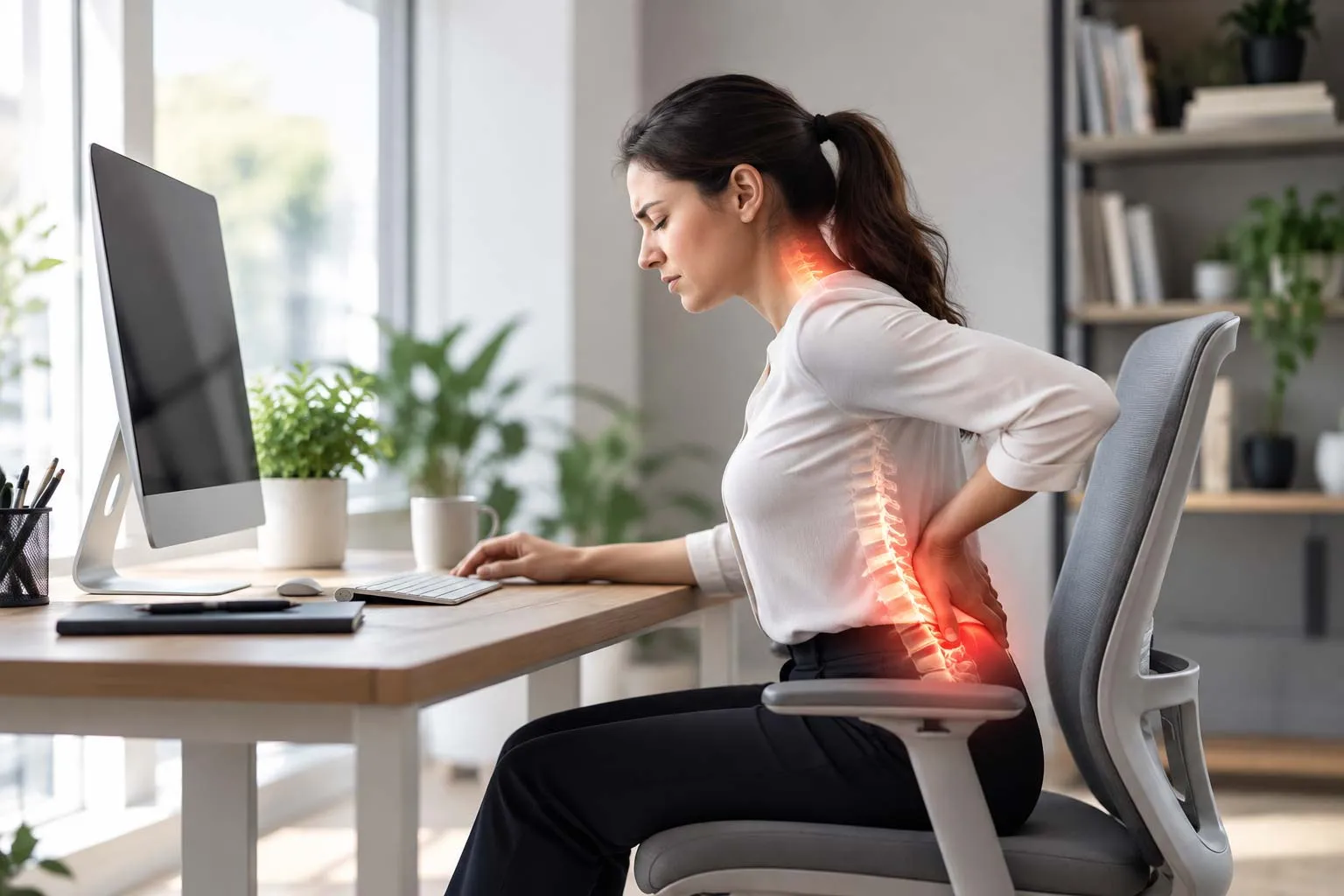
 Why Sitting for Long Hours Hurts Your Back (and What Actually Helps)
Le Yantra Team · Reviewed by Dr. Palanivel Mayavan

Your back has been hurting for weeks, an MRI report mentions a disc bulge, and the word surgery keeps coming up. Most people with back pain, including many with disc problems, recover without an operation.
Le Yantra Team · Reviewed by Dr. Palanivel Mayavan Updated

Your back has been hurting for weeks. Maybe the pain runs down one leg. Maybe an MRI report mentions a “disc bulge”, and now the word surgery keeps coming up in your mind.
Here’s the reassuring part: most people with back pain, including many with disc problems, recover without an operation. International guidelines recommend non-surgical care, especially exercise-based physiotherapy, as the first line of treatment for most back pain.
This guide explains what usually causes back pain, how physiotherapy helps, how long recovery takes, and the specific situations where surgery genuinely is the right step.
Back pain can come from muscles, joints, discs, nerves or other structures around the spine, and often more than one factor is involved. Common contributors include:
Disc bulges and “degeneration” are very common in people who have no back pain at all, and they become more common with age. So an abnormal finding on a scan doesn’t always explain your pain. Imaging only makes sense when it is read together with your symptoms and a clinical examination.
This is one of the most common worries we hear, and the answer is usually no.
Many disc herniations shrink or settle on their own over time, and a large number of people with disc-related back or leg pain improve with non-surgical treatment. Whether you need more than conservative care depends on:
In other words, the decision is based on the whole picture, not on the scan alone.
Good physiotherapy isn’t one fixed treatment applied to everyone. It’s a plan that moves through stages as you improve.
We start by understanding your pain and what it stops you doing. That includes checking:
This tells us which treatment approach suits you, and whether you need a medical review or further tests before we begin.
In the early phase, the aim is to calm symptoms enough for you to move more comfortably. Depending on your condition, this may include:
Pain relief is the starting point, not the end goal. The real aim is getting you back to normal function.
Exercise is the core of modern back-pain rehabilitation and the treatment with the strongest evidence behind it. Your programme may include:
Each exercise is chosen for your symptoms, current strength and goals, and progressed as you improve.
Back pain isn’t usually caused by one “wrong” posture, and avoiding movement forever tends to make things worse. Instead, we help you gradually rebuild confidence with everyday tasks: sitting and working, lifting, household activities, sleep routines and your workstation setup.
Once pain settles, rehabilitation keeps going until you’re ready for everything your life demands:
Mobility → Strength → Control → Capacity → Function → Confidence
For athletes, this final stage includes sport-specific conditioning and a planned return to training and competition.
There’s no fixed number of sessions that fits everyone. Recovery depends on:
Rather than guessing, a good plan tracks measurable changes in pain and function and adjusts treatment based on your progress.
Some episodes of back pain resolve completely. Others improve a lot but return later, particularly when the factors behind them are still there. Common reasons for recurrence include:
That’s why we focus on building long-term capacity, not just treating each flare-up as it happens. Physiotherapy aims to reduce pain, restore movement and strength, get you back to work and sport, and help you feel confident in your back again.
Physiotherapy doesn’t replace surgery when surgery is genuinely needed, and the two aren’t competitors. The right question is always: what’s the best treatment for this person and this condition?
A surgical opinion may be appropriate when severe leg pain or nerve symptoms persist and significantly limit your life despite a good course of non-surgical treatment, or when nerve function is getting progressively worse. Your physiotherapist should refer you promptly if that happens.
Seek urgent medical care if you have:
At Le Yantra Spine & Sports Injury Clinic, every plan starts with understanding why you’re in pain. Our care brings together physiotherapy, spine rehabilitation, chiropractic care, sports injury rehabilitation, and strength and conditioning, all tailored to you.
Our aim is to help you understand your condition, take an active part in your recovery, and get back to the things that matter to you.
If back pain is affecting your work, sleep, exercise or daily life, an assessment can show you the next step. For many people, a structured non-surgical programme is the path to recovery.
Book an assessment at our Malleshwaram or MEI Layout clinic.
Can a slipped disc heal without surgery? In many cases, yes. Disc herniations often shrink over time, and many people improve with physiotherapy and non-surgical care. Surgery is usually reserved for severe or worsening nerve symptoms or pain that doesn’t respond to good conservative treatment.
Should I rest completely when my back hurts? Usually not. Staying gently active, within comfort, generally helps recovery more than bed rest. Your physiotherapist can guide how much and what kind of activity suits you.
Do I need an MRI before starting physiotherapy? Not always. Most back pain can be assessed clinically. Imaging is recommended when there are warning signs, severe or worsening nerve symptoms, or when the result would change your treatment.
How many physiotherapy sessions will I need? It varies with your condition, its severity and how you respond. Your plan should be reviewed regularly against measurable goals rather than fixed in advance.
When should I see a surgeon for back pain? Seek urgent care for bladder or bowel changes, saddle numbness or rapidly worsening leg weakness. Otherwise, a surgical opinion is worth considering when severe leg pain or nerve symptoms persist despite a proper course of non-surgical treatment.
This article is for general educational purposes and does not replace an individual medical assessment. Back pain can have many causes. If you have severe, worsening or unexplained symptoms, seek appropriate medical evaluation.
Spine health Le Yantra Team · Reviewed by Dr. Palanivel Mayavan
 Spine health
 Le Yantra Team · Reviewed by Dr. Palanivel Mayavan
 Spine health
 Le Yantra Team · Reviewed by Dr. Palanivel Mayavan
Your wellness starts here
Reading about it only goes so far. Every treatment plan at Le Yantra starts with a full assessment, not a standard protocol.
Monday – Saturday 9 AM – 9 PMSunday & public holidays 10 AM – 5 PM

We use analytics cookies to understand how this website is used. They are set only if you accept. Privacy policy